








The ATPL : The aviation training path to becoming a professional airline pilot
Categories :
Pilot formation
Table of contents
keyboard_arrow_down
- The ATPL : The aviation training path to becoming a professional airline pilot
- What is the ATPL and what is this pilot licence for?
- Can you start ATPL training without any flying experience?
- Integrated or modular training : two routes to the cockpit
- The core of ATPL training : aeronautical theory
- Practical training : from basic flying to the cockpit of a commercial aircraft
- Duration and cost of ATPL training in France : a long-term investment
- After ATPL training : starting a career as an airline pilot
- Why ATPL training remains one of the finest professional projects in aviation
The ATPL : The aviation training path to becoming a professional airline pilot
Becoming a professional airline pilot is the dream of thousands of children and aviation enthusiasts, whether they are teenagers fascinated by commercial aircraft such as the Airbus A380 or the Boeing 737, or private pilots who wish to take the next step into this world full of high-flying adventures. Sooner or later, one question always arises : how do you actually become an airline pilot? In Europe, and especially in France, the answer lies in a very specific training path : the ATPL.
What is the ATPL and what is this pilot licence for?
In practical terms, the ATPL (Airline Transport Pilot Licence) allows you to operate as a captain on commercial airliners and is considered the highest level of certification in commercial civil aviation. It is defined by EASA regulations so that it is recognised across all member states of the European Union.
However, many people believe that you can become a captain as soon as you graduate from flight school. This is a common misconception. In reality, once you have passed the theoretical exams and obtained your licences and practical ratings (CPL, IR, ME, MCC, etc.), you hold what is known as a “Frozen ATPL”. To unfreeze it, you must accumulate a significant number of flight hours and, above all, real experience in commercial operations.
This progression is fundamental in aviation. It shows that airline pilot training is not just an academic course, but the beginning of a career built on experience, discipline and responsibility.
Can you start ATPL training without any flying experience?
This is one of the most frequently asked questions, both among young aviation enthusiasts and adults considering a career change. The reassuring answer is yes : it is absolutely possible to start ATPL training without having ever flown an aircraft before. In fact, this is precisely the goal of many flight schools, which offer “zero-to-hero” programmes designed to take students step by step to the level required to work for an airline.
The only essential requirement before enrolling is obtaining a Class 1 medical certificate, issued by the DGAC. Age also plays an important role in the training timeline : the CPL can only be obtained from the age of 18, and the full ATPL from the age of 21. However, training can start earlier through integrated programmes or preparatory courses.
Integrated or modular training : two routes to the cockpit
When you decide to join a flight school, two main paths are available : integrated training and modular training. Both lead to the same final goal : obtaining the licences and ratings required to become a first officer in an airline.
Integrated training follows a structured, intensive and highly organised programme. The student joins the school and follows a continuous course designed to take them from start to finish in about 18 to 24 months. ATPL theory and practical training are scheduled according to a strict timetable, with strong academic supervision. This route is particularly well suited to young students who have just finished their studies and can fully dedicate themselves to their airline pilot project.
Modular training, on the other hand, is based on a much more flexible approach. The future pilot builds their path step by step, completing the different licences and ratings one after another. This method makes it possible to spread the training over time, distribute the costs and sometimes work in parallel. It is often chosen by private pilots, career changers, or candidates who want to keep more freedom in their personal and professional organisation. In return, it requires strong self-discipline and long-term motivation.
It is important to stress that EASA makes absolutely no distinction between these two routes. The exams, licences and requirements are exactly the same. For an airline, what really matters is the pilot’s level, maturity and ability to work as part of a crew in a professional environment.
The core of ATPL training : aeronautical theory
Let us now look more closely at what awaits you in terms of theoretical knowledge and subjects to master. The aim of the ATPL theoretical training is to ensure that every future airline pilot has a solid command of all the knowledge required to operate a commercial aircraft safely and in accordance with procedures.
This training covers fourteen subjects, ranging from air law to meteorology, including navigation, performance, principles of flight, operational procedures and human factors. These areas form the intellectual foundation of the airline pilot profession and are used on a daily basis in the cockpit.
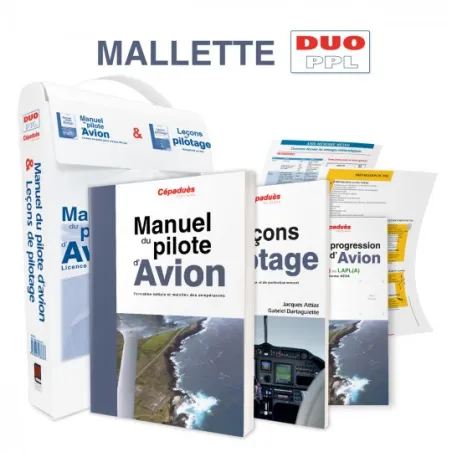
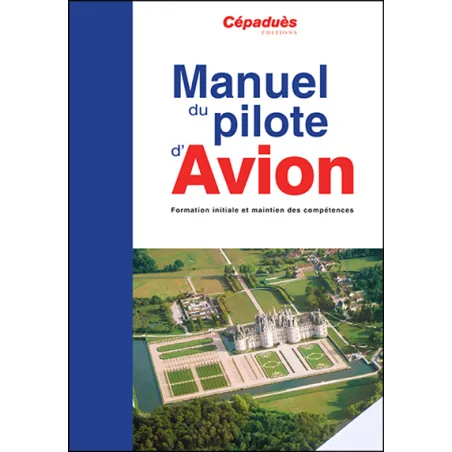
This is particularly true for key subjects such as air law and air traffic procedures, which structure all operational activity, or aircraft systems and instrumentation, which provide an in-depth understanding of how the aircraft works and how onboard systems are operated. During training, students typically rely on specialised manuals, such as those from Institut Mermoz, for subjects like air law, air traffic procedures, aircraft systems and instrumentation, which serve as reference materials throughout ATPL exam preparation.
The theoretical exams take the form of multiple-choice questions and require a high level of rigour, with a pass mark set at 75% for each subject. It is important to note that this is not an overall average, but a minimum score that must be achieved in each of the fourteen subjects. This is why, for many students, this phase represents a real challenge that builds both their aeronautical culture and, above all, the analytical skills essential to the airline pilot profession.
Subjects such as radiotelephony communications or principles of flight are also part of these theoretical pillars, and students often deepen their understanding using dedicated textbooks to strengthen their foundations before the exams.
Practical training : from basic flying to the cockpit of a commercial aircraft
Let us now turn to the practical side, which forms the second fundamental pillar of ATPL training. It transforms theoretical knowledge into operational skills and prepares future pilots for the reality of commercial air transport.
After learning the basics of flying, the student progresses towards obtaining the Commercial Pilot Licence (CPL). This licence marks entry into the professional world. It is followed by essential ratings, notably the Instrument Rating (IR), which allows flying without external visual references, and the Multi-Engine rating (ME), required for the aircraft used in airline operations.
The most emblematic qualification at this stage is the MCC (Multi-Crew Cooperation), which places crew coordination at the heart of the training. It teaches future pilots cockpit communication, resource management and decision-making in an environment that closely resembles that of a real airline. This training is generally carried out on flight simulators that accurately reproduce the behaviour of modern commercial aircraft. These qualifications are validated through practical tests conducted by examiners approved by the DGAC.
Duration and cost of ATPL training in France : a long-term investment
Talking about ATPL training without mentioning time and cost would be unrealistic, as becoming an airline pilot represents a significant investment. Fees vary depending on the school, its location and the financial aid available.
In terms of duration, integrated training generally lasts around two years, while the modular route can take between three and five years depending on your pace and personal constraints. Financially, in France, a complete airline pilot training programme usually costs between €85,000 and €110,000 when all modules, flight hours and additional fees are taken into account.
On top of this budget, you must also consider other expenses such as official exam fees, medical examinations, training materials and everyday living costs during the training period. That is why it is essential to approach this project as a long-term investment and to carefully prepare your financing plan before getting started.
After ATPL training : starting a career as an airline pilot
Congratulations, if you have reached this point, it means you have obtained your Frozen ATPL and can start applying to airlines for a first officer position. Before flying a specific aircraft type, you will need to complete a type rating, which is specific to the aircraft operated by the airline that hires you. Depending on the company, this rating may be fully or partially funded by the airline, but in some cases it may remain at the pilot’s expense. It is therefore important to clarify this point at the time of recruitment.
This phase marks the true beginning of your professional career in commercial aviation. You will then build experience through different types of operations, whether regional flights, charter services or cargo transport. Over time, you will discover how airline operations really work : schedule management, crew coordination and the responsibilities involved in carrying passengers. Once you reach the threshold of 1,500 flight hours, your ATPL can be unfrozen and you will obtain a full ATPL.
Why ATPL training remains one of the finest professional projects in aviation
ATPL training is not an easy path. It requires motivation, discipline, commitment and total dedication, including financially. In return, it opens the door to a unique profession at the heart of air transport, in the cockpit of commercial aircraft that connect millions of people around the world every day.
Share this content
Add a comment